UNESCO Backs Kiswahili as a Language for Africa's Creator Economy
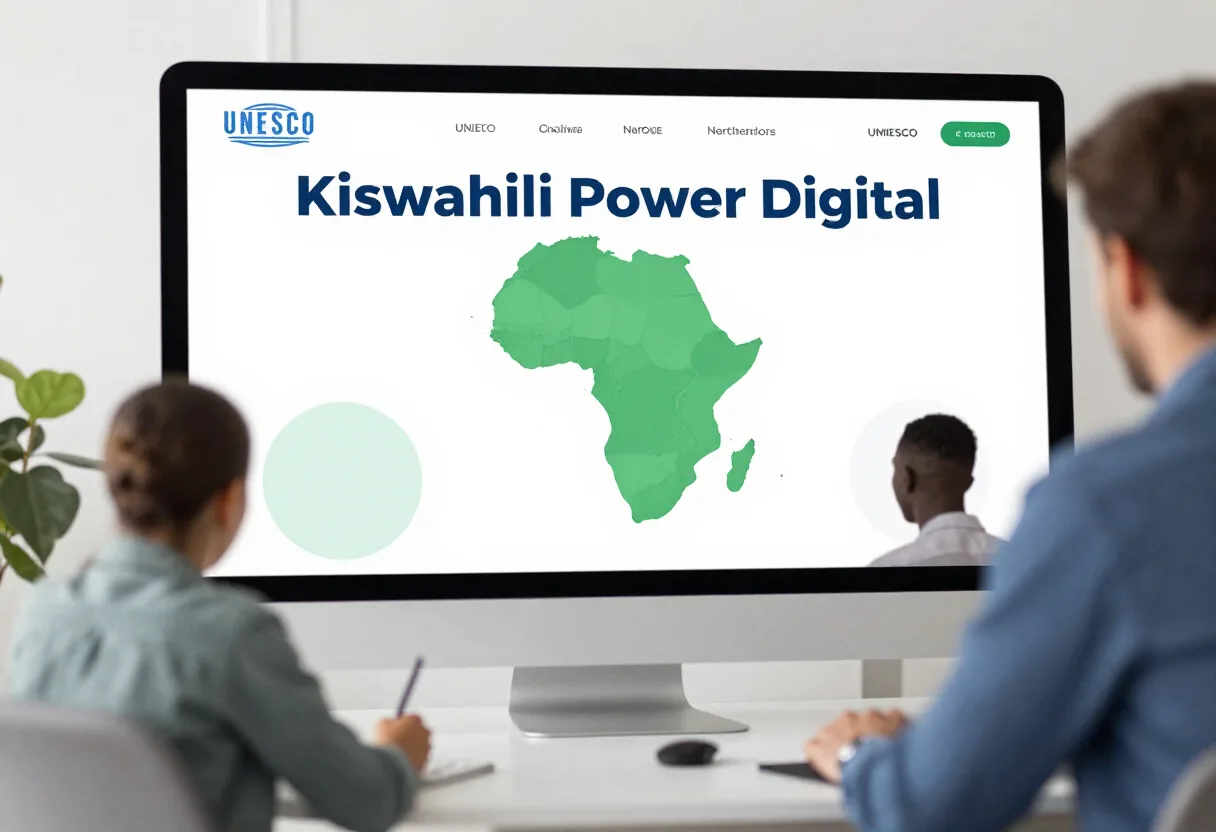
UNESCO says it is helping Kiswahili power Africa's digital creator economy, a UN-level endorsement that could reshape training, funding and platform attention for Swahili-first creators.
By Grace Kim
3 min readAt a glance
- UNESCO has publicly announced support for Kiswahili as a driver of Africa's digital creator economy.
- No budget figures, platform partners, dates, or participant numbers were included in the accessible announcement.
- Kiswahili has official-language status in multiple African countries and a speaker base in the hundreds of millions.
UNESCO has publicly framed Kiswahili as a growth engine for Africa's digital creator economy, announcing support aimed at helping Swahili-speaking creators participate more fully in online content markets.
That single confirmed fact — a UN cultural agency throwing its institutional weight behind an African language as a creator-economy asset — matters for practitioners tracking where platform investment, training programs, and audience expansion are heading on the continent.
What is officially confirmed
UNESCO says it is helping Kiswahili "power Africa's digital creator economy." The organization's own channels carry the announcement. Beyond that headline commitment, the published material available at the time of writing provides little operational detail: no budget figures, no named partner platforms, no enrollment numbers, and no start or end dates have been confirmed by UNESCO in the accessible announcement.
Practitioners should treat any claims circulating on social media about specific funding amounts, platform partnerships, or creator payouts as unverified until UNESCO or a named partner confirms them.
Why Kiswahili, and why now
Kiswahili is one of Africa's most widely spoken languages, with hundreds of millions of speakers across East and Central Africa and official-language status in multiple countries, including Kenya and Tanzania. For creators, that language base represents a large, increasingly connected audience whose content consumption has historically been under-served by tooling, monetization products, and training built around English-first assumptions.
For brands and agencies, language-specific creator ecosystems often deliver higher engagement at lower cost than saturated English-language markets — a pattern already visible in other non-English creator economies. Any program that formalizes training, tools, or recognition for Kiswahili creators could accelerate that dynamic.
What this means for practitioners
Three practical implications follow from UNESCO's stated commitment:
First, legitimacy. UN backing gives Kiswahili-language content a stronger claim on platform features, brand budgets, and policy attention. Creators producing in Kiswahili can cite institutional recognition when pitching sponsors or applying for creator programs.
Second, skills and capacity. UNESCO's involvement signals a likely focus on training and professionalization rather than direct payments. Creators and media organizations in the region should watch for program announcements, application windows, and partner institutions in the coming months.
Third, market signal. Development organizations and donors frequently follow UNESCO's lead on language and media initiatives. Agencies working in East Africa may see new funding streams for Swahili-language production, translation, and digital-literacy work.
Claims to hold loosely
Because the accessible announcement is headline-level, several questions remain open. Which platforms, if any, are partnering with UNESCO? What is the program's budget and duration? How many creators does UNESCO expect to reach, and in which countries? None of these details is confirmed. Creators and marketers should base decisions on official UNESCO documentation as it appears, not on secondary summaries or social posts.
The road ahead
UNESCO's commitment positions Kiswahili as a serious language of digital production, not merely translation. If the agency follows its announcement with concrete programs — training cohorts, platform partnerships, or creator funds — East Africa's Swahili-first creators could move from the margins of the creator economy toward its center, and the next few months of UNESCO program disclosures will show how far that shift goes.
Source: Google News: Creator economy
Grace Kim
Show full bio
Senior reporter covering companies, deals and strategy in Social platform news and policy at Reach Brief.
Related articles
2026 Content Creator Awards to Spotlight South Africa's Digital Talent
Excluvia Positions Sustainable Income Model in Africa's Creator Economy
South Africa Pushes TikTok to Open Creator Economy to Local Talent
Impacc Backs HustleSasa's Push Into Africa's Creator Economy
South Africa's Creator Economy Becomes an Editorial Priority