Skincare Is the New Primer: How K-Beauty Rewired Beauty Marketing
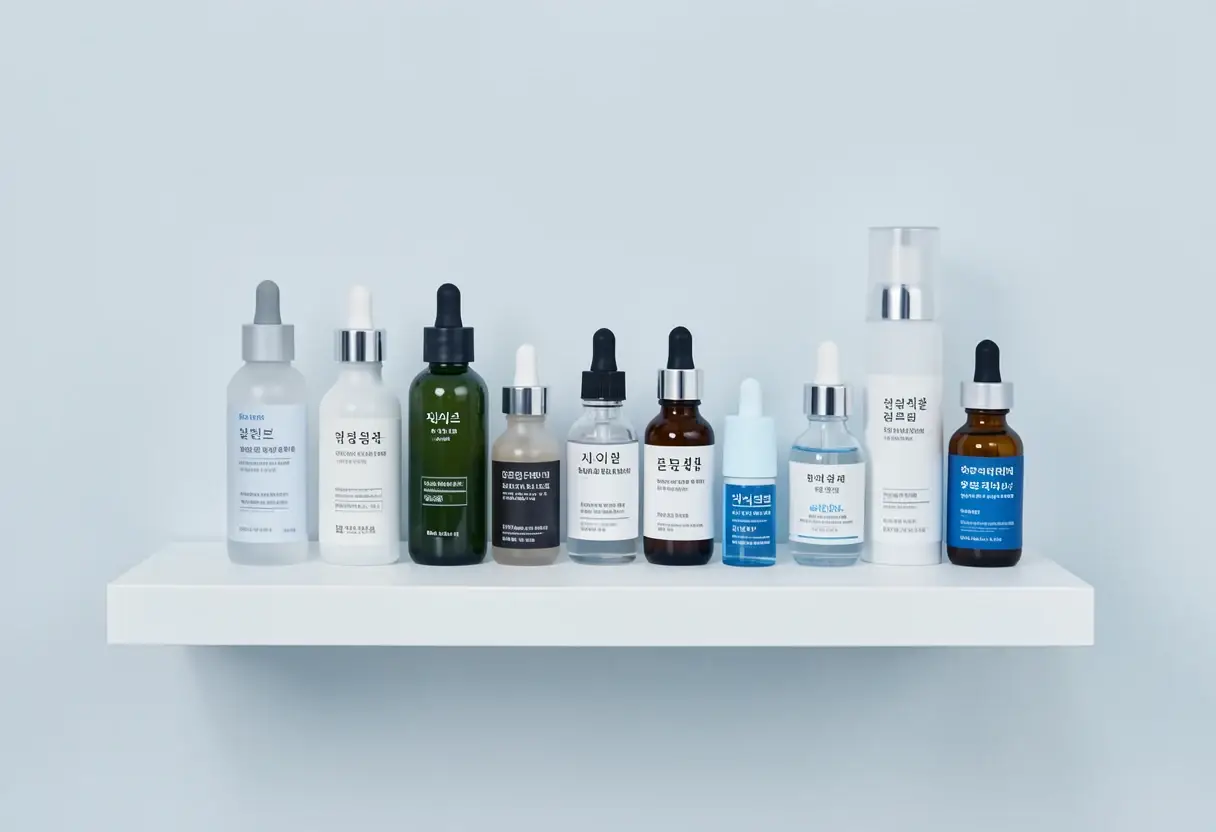
K-beauty has "completely upended" US beauty marketing: foundations sell as serums, blush sells on barrier benefits, and TikTok Shop turns 60-second ingredient dives into instant sales.
By Marcus Bennett
3 min readAt a glance
- VM's Claire Kane says Korean skincare has "completely upended" beauty marketing, with foundations marketed as serums and lipsticks as lip oils
- Bakuchiol, a plant-based retinol alternative, is the most popular skincare ingredient in South Korea but relatively unknown in the US
- TikTok Shop and Amazon let consumers buy directly from a creator's 60-second formulation deep dive
- Sephora, Ulta, and Target host K-beauty through shop-in-shop concepts, including Sephora's partnership with Olive Young
- No official certification defines K-beauty; brands like Laneige, Dr. Melaxin, and COSRX define it through shared aesthetics and science-backed positioning
Foundations now get marketed as "serums," lipsticks as "lip oils," and blush sells on its "hydrating barrier properties" — concrete proof that Korean skincare has rewritten the vocabulary of American beauty marketing. Claire Kane, evp and director of strategic planning at VM, told ADWEEK that Korean skincare has "completely upended" how beauty brands market their products, both in the US and abroad.
The shift runs deeper than packaging or buzzwords. American skincare has historically been reactive, Kane explained: you either mask an imperfection with concealer or reach for a clinical product to fix the problem. Korean beauty frames skincare differently — as a preventive, holistic self-care ritual that anyone can join. That reframing, from correction to maintenance, is what's changed the messaging playbook for the entire category.
No license, no problem
There's no official certification that designates a product or brand as "K-beauty." Brands like Laneige, Dr. Melaxin, and COSRX nonetheless share an understated visual identity and a science-backed philosophy that has come to define the category in shoppers' minds. The label functions as a promise — gentle actives, transparent formulations, minimalist design — rather than a regulated standard.
That promise carries weight because many Korean ingredients are still unfamiliar to American buyers. David Van Veen, managing director of beauty branding agency MSLK, told ADWEEK that the education component matters most: K-beauty brands emphasize transparency in their formulations, and many actives used in Korean products are gentler on the skin than their Western counterparts. Bakuchiol, a plant-based retinol alternative, is the most popular skincare ingredient in South Korea — yet relatively unknown in the United States. That gap between familiarity and demand is where marketers are spending their energy.
What does this change for social commerce?
The self-care framing has supercharged K-beauty's social media engine. Social platforms do two jobs at once: they host the ritual itself — the sharing of routines — and they let brands educate consumers on lesser-known products and ingredients, converting scrollers into shoppers fast.
"TikTok Shop and Amazon work hand in hand," Kane said. "A creator posts a raw, 60-second deep dive into a formulation, and you can buy it immediately from their feed or pull it up on Amazon." Modern skincare consumers, in her words, "love the thrill of organic discovery and geeking out on ingredient science." For practitioners, that means the winning content format is unpolished ingredient education with a frictionless checkout attached, not glossy brand films.
Shelf space follows the feed
Social e-commerce handles impulse purchases, but physical retail still matters — and it's adapting. K-beauty brands have partnered with legacy retailers like Sephora, Ulta, and Target to reach shelves. To make the category land in-store, Kane said these retailers are using curated "shop-in-shop" concepts — a branded section within a larger store — like Sephora's partnership with Korean retailer Olive Young. The goal: replicate the online discovery experience offline while educating shoppers face to face.
The takeaway for Western brands
Kane's advice for Western brands eyeing the trend: don't force it. Consumers will always want to try new things, she said, and skin changes over a lifetime, creating repeated openings for education and product adoption. Western brands can't buy their way into K-beauty credibility, but they can tap the same curiosity driving consumers to discover new products.
"If brands stop thinking strictly about immediate sales and start genuinely geeking out on skin health alongside their community, the alignment will happen naturally," Kane said. For marketers, that's a reordering of priorities — community education first, conversion second — in a category where the ingredient deck has become the ad copy.
Expect the skincare-as-primer lexicon to keep spreading as ingredient-literate consumers demand the same transparency from color cosmetics and Western incumbents alike.
Source: Adweek Social Media
Marcus Bennett
Show full bio
Market editor covering money, funding and market shifts around Social platform news and policy at Reach Brief.
Related articles
Celebrity Beauty Brands Claim Half of Creator-Marketing Top 10
Authentic Brands Sets Its Sights on the Creator Economy
MESC Names KlugKlug Its Official Influencer Intelligence Platform
Emerging Beauty Brands Swap Influencer Fees for Outcome-Based Pay
Ulta Beauty Casts Selena Gomez and Tate McRae in Holiday Campaign